

7 Healthy Holiday Habits for Weight Management
Healthy Holidays, Healthy Habits | Part 2 of 4
Between holiday shopping, family gatherings, travel, and year-end commitments, December can feel like one of the busiest months of the year. With so much happening, everyday habits that support your health can easily fall out of your routine.
In the first article of our Healthy Holidays, Healthy Habits series, Healthy Eating During the Holidays – 8 Tips for Managing Your Weight, we shared ways to enjoy your favorite holiday foods while making balanced nutrition choices.
But healthy living during the holidays goes beyond what’s on your plate. How you spend your time, manage stress, stay active, and get enough rest can also play a role in your overall health and weight management.
Rather than waiting until January to focus on your health, consider these seven realistic holiday habits that can help you build a routine that works throughout the season and beyond.
1. Create a Flexible Daily Routine
Holiday schedules often look different from our usual routines. You may be traveling, working different hours, hosting guests, or attending more social events than usual.
While maintaining your normal schedule may not always be possible, keeping a few familiar habits in place can help bring some structure to your day.
Start by identifying two or three habits that are important to you. These might include:
- Eating breakfast before starting your day.
- Taking a few minutes to stretch in the morning.
- Setting aside time for physical activity.
- Following your usual evening routine.
- Going to bed around the same time each night.
Think of these habits as the foundation of your day. Even when your schedule changes, they can provide a sense of consistency.
It may also help to connect a healthy habit to something you already do. For example, if you make coffee every morning, use that time to review your plans for the day. If you regularly watch the evening news, consider using part of that time to stretch or move around.
The goal is not to follow a strict schedule. It’s to create a flexible routine that you can adjust when life gets busy.
Try this: Choose three everyday habits you would like to maintain throughout December. Write them down somewhere you will see them regularly.
2. Plan Ahead for Busy Holiday Days
Some of the biggest challenges to maintaining healthy habits happen when we’re short on time.
A morning of holiday shopping can turn into an entire afternoon away from home. A family gathering may run later than expected. Travel delays can change meal schedules, and unexpected commitments can leave little time for yourself.
Planning ahead can make these situations easier to manage.
If you’re traveling
- Pack a few snacks for the journey.
- Bring a reusable water bottle.
- Plan opportunities to get up and move during longer trips, when it is safe to do so.
- Bring comfortable shoes if you plan to be active while away.
If you’re hosting a gathering:
- Prepare what you can ahead of time.
- Share cooking and cleaning responsibilities with others.
- Keep a few easy meal options available for the days before and after the event.
- Schedule time for yourself, even if it’s just a few minutes.
If your calendar is filling up:
- Review your upcoming commitments at the beginning of each week.
- Identify particularly busy days.
- Decide ahead of time when you can fit in meals, movement, and rest.
- Leave some open time for unexpected changes.
Planning ahead doesn’t mean organizing every minute of your day. It simply means recognizing situations that may interrupt your routine and having a few alternatives ready.
For additional ideas on making balanced food choices during holiday gatherings, revisit our 8 healthy holiday eating tips.
Try this: Spend 10 minutes looking at next week’s calendar. Identify your busiest day and prepare one thing in advance that will make that day easier.
3. Find Ways to Stay Active That Fit Your Day
Cold weather, shorter daylight hours, and busy schedules can make it more challenging to stay physically active during the holiday season.
However, physical activity doesn’t have to involve a gym membership, exercise equipment, or a lengthy workout.
Regular physical activity supports heart health, mental well-being, sleep, and weight management.
The Centers for Disease Control and Prevention (CDC) recommends that adults aim for at least 150 minutes of moderate-intensity physical activity each week, along with muscle-strengthening activities at least twice a week.
That may sound like a lot, but activity can be spread throughout the week in shorter periods. Some activity is better than none.
Simple ways to stay active during the holidays
- Walk around an indoor shopping center.
- Spend time walking through a neighborhood decorated with holiday lights.
- Dance to your favorite holiday music.
- Follow a beginner-friendly exercise video at home.
- Take movement breaks while working on holiday projects.
- Try chair-based exercises if standing or walking is difficult.
- Join a friend for an indoor or outdoor walk.
If you normally exercise for 30 minutes but only have 10 minutes available, consider using those 10 minutes instead of skipping activity altogether.
It can also be helpful to have an indoor alternative for days when the weather makes outdoor activity difficult or unsafe.
Remember that physical activity is not something you need to do to make up for eating holiday foods. Movement can be an enjoyable way to support your health, spend time with others, and feel your best.
Choose activities that match your fitness level, mobility, and individual health needs. If you’re unsure which activities are appropriate for you, speak with your healthcare provider.
Try this: Create a list of three activities you enjoy that can be completed in 10 to 15 minutes. Keep the list handy for days when your schedule changes.
4. Make Getting Enough Sleep a Priority
Late-night celebrations, travel, visiting relatives, and early-morning commitments can all interrupt your usual sleep schedule.
While it may be tempting to cut back on sleep to get everything done, getting enough quality sleep is an important part of supporting your health.
Sleep plays a role in how your body functions, including your metabolism, mood, and ability to manage stress. Getting enough sleep can also support healthy weight management.
According to the CDC, most adults need at least seven hours of sleep each night, although individual sleep needs vary by age.
Simple ways to improve your holiday sleep routine
- Aim for consistent bedtimes and wake-up times when possible.
- Put away your phone or other electronic devices at least 30 minutes before bedtime.
- Avoid caffeine later in the day.
- Keep your bedroom cool, quiet, and comfortable.
- Give yourself time to unwind before going to bed.
- Avoid scheduling unnecessary early-morning activities after late-night gatherings.
If you’re staying somewhere unfamiliar, bringing a favorite pillow, sleep mask, or other familiar comfort item may help you settle into your surroundings.
One late night doesn’t mean your sleep routine is ruined. When your schedule allows, return to your regular sleeping habits.
If you frequently have difficulty falling asleep, staying asleep, or feeling rested, consider discussing your sleep concerns with a healthcare provider.
Try this: Set a nightly reminder to begin winding down 30 minutes before your planned bedtime.
5. Make Time to Manage Holiday Stress
The holidays can bring excitement and joy, but they can also bring financial pressures, family responsibilities, travel concerns, and a long list of things to accomplish.
For some people, this time of year can also bring feelings of loneliness, sadness, or grief.
Stress can affect people in different ways. It may change your appetite, energy levels, sleep patterns, or ability to concentrate. Over time, ongoing stress can also affect physical and emotional health.
Making time for your own well-being is just as important as taking care of your holiday responsibilities.
Give yourself permission to simplify
Not every holiday activity needs to be a tradition. Consider which commitments are most meaningful to you and which ones could be simplified, shared with someone else, or skipped.
Schedule short breaks
You don’t need an entire afternoon to take care of yourself. A few minutes spent doing something you enjoy can provide a welcome break.
Consider:
- Reading a few pages of a book.
- Listening to music.
- Spending time outdoors.
- Practicing slow, relaxed breathing.
- Working on a favorite hobby.
- Calling someone you enjoy talking with.
Recognize when you need additional support
Sometimes, everyday stress management strategies aren’t enough. If stress, sadness, or worry regularly interferes with your daily life, speaking with a healthcare or mental health professional may help.
Your holiday experience doesn’t need to match anyone else’s expectations. Creating a season that feels manageable for you is a reasonable goal.
Try this: Choose one activity or responsibility you can simplify this week. Use some of the extra time to do something you find relaxing.
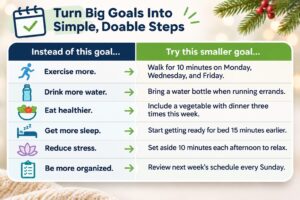
6. Set Small, Achievable Goals Instead of Waiting Until January
Many people associate healthy lifestyle changes with New Year’s resolutions. But you don’t need to wait until January 1 to start building habits that support your health.
In fact, starting with one small change during December may be more manageable than trying to change several things at once in the new year.
Instead of setting broad goals, focus on specific actions that fit into your daily life.
Measure progress beyond the scale
If you are working toward weight management goals, it can be easy to focus mainly on changes in your weight.
However, there are other ways to recognize progress, such as:
- Becoming more consistent with physical activity.
- Establishing a regular sleep routine.
- Feeling more prepared for busy days.
- Making time for enjoyable activities.
- Following through on a personal health goal.
Consider keeping a simple checklist or calendar to track the habits you are working on. This can help you notice patterns and identify which changes are working well for you.
If a goal turns out to be difficult to maintain, adjust it. A goal that fits your life is more useful than one that looks impressive but is difficult to follow.
Try this: Choose one small health goal for the next seven days. At the end of the week, consider what worked well and whether you want to continue or adjust it.
7. Create a Support System and Start Healthy Holiday Traditions
The holidays offer opportunities to spend time with friends, family, neighbors, and members of your community.
Supportive relationships can benefit both physical and emotional well-being. Having someone who encourages your healthy habits may also make it easier to stay motivated.
You don’t need everyone around you to have the same health goals. Simply sharing an activity or asking for encouragement can be helpful.
Consider starting a new holiday tradition that focuses on connection and enjoyment.
Healthy holiday tradition ideas
- Organize a family walk to see holiday decorations.
- Visit a local holiday market with friends.
- Volunteer together at a community organization.
- Plan a game night or holiday craft activity.
- Cook a new recipe with a family member.
- Spend time outdoors when weather permits.
- Schedule a weekly phone call with someone you care about.
- Invite a friend to join you for a regular walk.
If you live alone or your loved ones live far away, opportunities for connection may include local community centers, walking groups, volunteer organizations, or other activities that match your interests.
A support system should encourage you, not make you feel judged or pressured about your weight, eating habits, or personal health choices.
The holidays are an opportunity to create memories. Finding ways to support your health while spending time with others can make healthy habits feel like an enjoyable part of life rather than another responsibility.
Try this: Invite a friend or family member to join you for one enjoyable activity this holiday season.
What to Do When Your Holiday Routine Gets Off Track
Even with the best intentions, there will be days when things don’t go according to plan.
You may miss your planned walk, stay up later than expected, or find yourself too busy to prepare a meal. These experiences are a normal part of life.
Rather than abandoning your goals, consider how you can adjust your plans.
Ask yourself:
- What made my routine difficult to follow today?
- Is there something I can do differently next time?
- What is one healthy habit I can return to tomorrow?
For example, if holiday shopping leaves you without time for your usual afternoon walk, you might try taking a shorter walk earlier in the day next time.
If evening commitments are affecting your sleep, consider leaving the following morning free when possible.
Learning how to adjust your habits when circumstances change is an important part of building a routine you can maintain throughout the year.
You don’t need to start over every time something doesn’t go as planned. Simply continue from where you are.
Remember That Weight Management Is Different for Everyone
Healthy habits can support overall health, but developing these habits does not guarantee weight loss or a particular health outcome.
Genetics, hormones, medications, medical conditions, age, and other factors can influence body weight. Some people may need additional medical support alongside lifestyle changes.
Your healthcare provider can help you better understand your individual health needs and discuss appropriate options.
To learn more about the connection between body weight, blood sugar, heart health, and other important aspects of your well-being, read our article, Obesity & Metabolic Health Awareness: Understanding Health Beyond the Scale.
Explore Local Weight Management Clinical Research Studies
Clinical research helps scientists better understand the factors that influence weight and evaluate potential new approaches to weight management.
At Rochester Clinical Research, we help connect our local community with clinical research opportunities.
Adults living with overweight or obesity may be eligible for current or future weight management research studies. A member of our study team can explain available opportunities, answer questions, and discuss whether you may qualify.
Each study has its own eligibility requirements. Participation is voluntary, and individual health benefits are not guaranteed.
Interested in learning more?
Explore Weight Management Research Studies
Complete the form to learn more and speak with a study specialist about available research opportunities.
Continue Reading: Healthy Holidays, Healthy Habits
Healthy habits are an important part of supporting your health, but why can managing weight still be difficult, even when you’re making consistent lifestyle changes?
In our next article, Why Is Losing Weight So Difficult? Understanding What Affects Your Weight, we’ll explore some of the factors that influence body weight and why weight management is more complex than simply eating less and exercising more.
Coming December 14.
Missed the first article in our series?
Healthy Eating During the Holidays – 8 Tips for Managing Your Weight
References and Resources
- National Institute of Diabetes and Digestive and Kidney Diseases (NIDDK) — Changing Your Habits for Better Health
- Centers for Disease Control and Prevention (CDC) — Steps for Losing Weight
- CDC — How to Have Healthier Holidays in 1-2-3!
- CDC — Adult Activity: An Overview
- CDC — About Sleep
- CDC — Managing Stress
- CDC — Improving Social Connectedness
- National Institutes of Health (NIH) — Clinical Research Trials and You: The Basics
Medical disclaimer: This article is intended for educational purposes only and is not a substitute for professional medical advice. Speak with your healthcare provider about nutrition, physical activity, sleep, and weight management recommendations based on your individual health needs.
The post 7 Healthy Holiday Habits for Weight Management appeared first on Clinical Studies Rochester, NY.